Monday, December 12, 2016

Puerto Rico Asset Value -- It's all about safety


2016-11-22 12.30.53.jpg
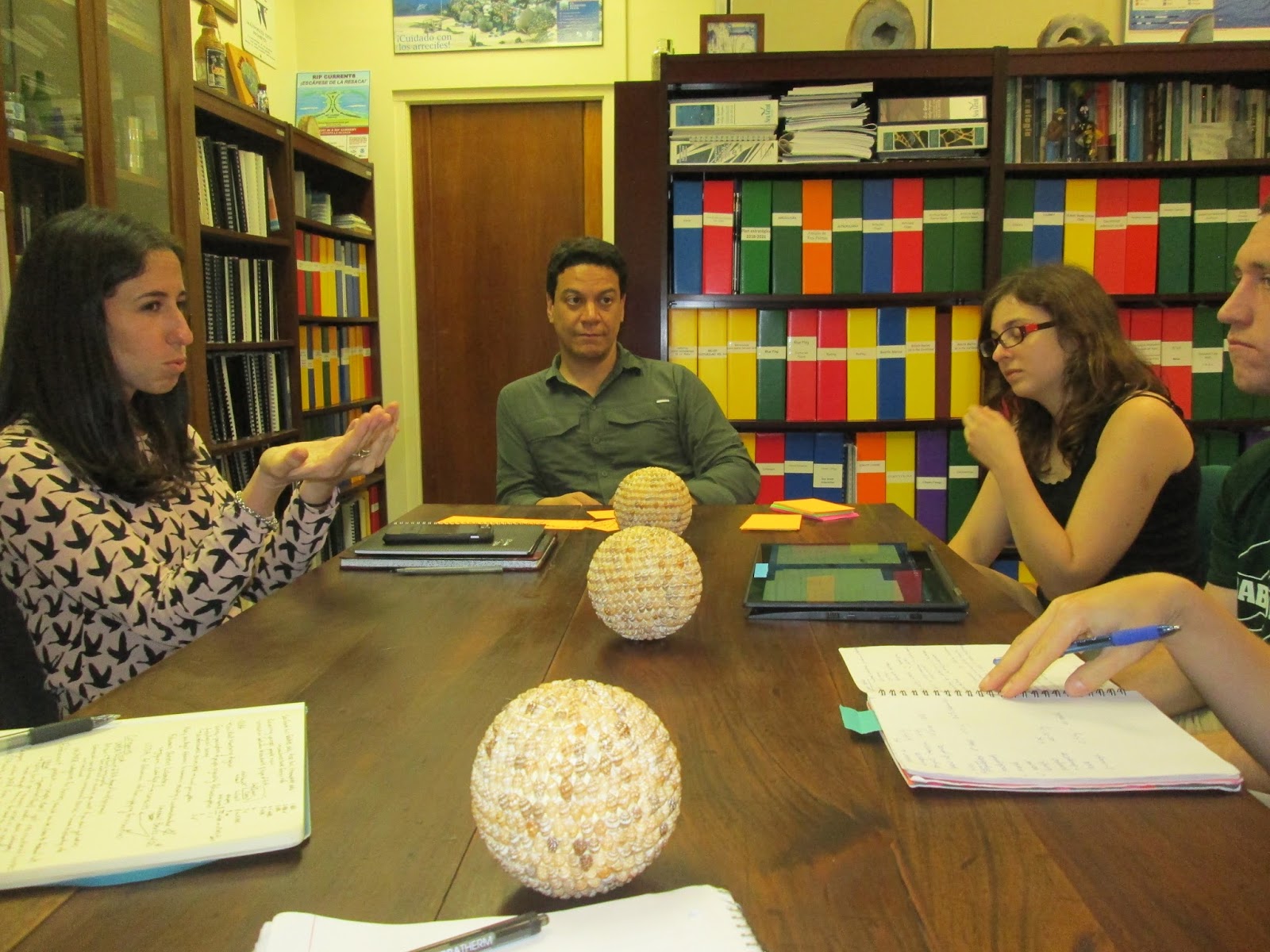
We squeezed everything we could out of our last day on our second trip to Puerto Rico. While we had to travel across the island to make our flight departing in San Juan, we managed to schedule a meeting with Dr. Arroyo at CentroMedico Hospital, the only location on the island with a three section hyperbaric chamber. A nurse practitioner spent hours going over the procedures they practice in treating between forty to sixty decompressed divers each year. The medical staff’s knowledge regarding the differing levels of injury a fisherman may experience after diving was valuable. We learned that there are two categories they use to describe scuba diving incidents. The first degree of injury is marked by fisherman who feel pains in their joints, have “the bends”, or who have decompression sickness. The second and more severe degree of injury is declared when patients exhibit neurological disorders. Unfortunately, the more times a fisherman is hurt enough to be transported to the chamber, the more susceptible they are to internal issues in the future, should they continue diving.

IMG_0521.JPGA major issue the doctors discussed with us is the fact that fisherman, in particular the new and younger ones, feel strongly against going to the chamber despite their medical state. They are either scared of the chamber itself, or worried that they will be held up from fishing the next day. We might expect, a person’s health is more important than money, however; we clearly can see a reversal of these notions in the diving fisherman. In conjunction with their consistent pushing of physical boundaries, the doctors explained that fisherman do not spend enough time above the water between diving cycles, causing their pains to worsen over time. Also, when fishermen surface and feel like they may get the bends, they will return to the water with the thought that the pressure will help them feel better, however; their returning underwater actually increases the amount of nitrogen within their blood and thus increases their chances of becoming extremely sick. We are trying to understand more clearly their reasoning for ignoring dive tables and pushing their bodies to their absolute limit. It is becoming more and more clear that fisherman who are the sole provider for their families feel pressured to continue to dive day in and day out despite the toll their work takes on their personal health.


IMG_0563.JPGA major breakthrough was made in meeting Dr. Arroyo, who is working on publishing a paper regarding Puerto Rican fisherman and their dive practices. He has explained to us that useful information such as age, gender, location, and reason for accidents amongst the fisherman will be of access to us via his publication, set to be available in the coming months. It was great to establish a relationship with Dr. Arroyo because he will be an invaluable resource to us and the next semester Asset Value team in decoding the diver’s motivations, activities, and repercussions of their work.

Puerto Rico Asset Value -- Meeting our collaborators at Sea Grant

After return from our lunch with Nelson in Rincon, we went to the University in Mayaguez for our meeting with Berliz Morales who runs the Aquatic Safety Outreach program through Sea Grant. We arrived a bit earlier than our meeting, so we decided to check out the nearby agricultural experiment station hoping to learn a little more about agriculture in Puerto Rico. When we arrived, we were told so sign in and the woman at the front desk emphasized to us that this was a research station not a botanical garden. But when we started to walk around it was hard to see that it was any different than any botanical garden other than some research greenhouses scattered around.

We thought we could walk along the path through the station straight over to sea grant for a pleasant detour and change of scenery. We were wrong. Turns out the whole area was fenced off and we ended up having to book it back to the car to make our meeting.

IMG_0515.JPGWhen we met with Berliz we learned about how Sea Grant had already been attempting to develop solutions to the issue of frequent decompression sickness among fishermen. In fact it was the doctors at the hospital who had originally alerted them to the issue as they saw more and more patients at the hyperbaric chamber. Berliz had a lot of valuable information and resources to share with us, and we ended up leaving her with a whole list of resources and contacts to send to us. It does seem like there are multiple entities aware and trying learn more about this issue in Puerto Rico and places in the Caribbean, so some of our work may have partially been done for us.

Sea Grants approach to the problem is education based as most of their work tends to be. It certainly seems like a case of we have a hammer and we are going to use it and hope it works sometimes. Berliz almost said exactly this in her own words during our meeting. We were glad hearing that there are people trying to address this issue, but we wondered if classes and education would be that effective. It seems to us like our advantage here is that we might be more flexible in the solutions that we could provide.

IMG_20161121_150832558.jpg
The team admiring a particularly large talipot palm tree at the experiment station

Puerto Rico Asset Value -- Revisiting our users


Blog Post Day 1
Our second first day in Puerto Rico was a resounding success. Maybe it was because we landed in San Juan at 19:30 instead of 04:00 and were better rested, or maybe it was because we were able to be much more focused in our questions and goals, or maybe it was that we already knew and felt familiar with our contacts, but it feels like we did a LOT more today than our first first day in Combate.
A couple things are different this time around. Most importantly, we're down two team members, as neither Mika nor Becca were able to come on this trip. Secondly, we're staying in a different apartment. Finally, and least (most?) importantly, we have the Swaggon  - our rental minivan swag wagon, which lets the whole team ride together everywhere we need to go. It has been great for team health and cohesiveness!
Our morning started out with a trip to our favorite breakfast location at 08:00, where we saw Jenny and Walter. Refreshed by the coffee and sandwiches, we buckled down and got organized for the day. At 10:00, Cesar, Paulina and I headed over to the Villa Pesquera to meet with Guillermo. Before he showed up we had the opportunity to talk with Tio Negro, one of the mechanics we spoke with last trip. We asked him about his motor’s repair and maintenance history in an attempt to get a sense of the economic impact of motors on our users’ lives. Guillermo arrived and joined in the conversation, contributing his own numbers to the database. Negro drifted away as Mickey, freshly shaved and smiling, came over and provided his knowledge on the subject of motor costs and lifetimes. We were able to get a better picture of how often motors need to be taken to a mechanic for service over and above the preventative maintenance that most fishermen do on their own.
The preparation we had done for the trip must have paid off since we were getting nugget after nugget of precious information, filling in the blanks in the picture we had begun to paint of life as a subsistence fisherman in Puerto Rico.


At some point, Oscar, Jamey and Anna showed up, and after a short time talking as a full group - and drinking some delicious fish soup made by Mickey's mother - we split up, with three of us talking with Guillermo, and the other three working with Mickey. In these subgroups, we performed several card sorting activities, to try to obliquely get sensitive information about the fishermen's priorities, finances, and values. These were incredibly successful, as the process of sorting and ranking values and priorities surrounding finances and time created a feeling of safety. This enabled our users to open up about their finances a bit more. and the information they provided us helped us to determine the effect that a few extra dollars a day could have on their lives. Around 12:30 we left the Villa, thanking our friends and making plans to see them the next day.
The day being far from over, we refilled water bottles and jumped in the Swaggon to meet Andy at his house. We attempted a card sort with Andy, but he wasn't having it, despite Anna's best efforts. The linear, organized thinking pattern that is so common at Olin didn’t fit with Andy’s narrative-based and experiential thought processes. Instead of sorting cards, he used their contents as jumping blocks for stories that the words on the card inspired within him, telling us about why teaching is so important to him and talking about the relationship between fishermen and government agencies. This was all valuable information that allowed us to get to know Andy a bit more - it was simply delivered in a way that was less organized than anticipated. While we were talking, the most powerful sun-shower I had ever seen passed through. It poured for a solid half hour, although there didn’t seem to be a single cloud overhead.


Always a wealth of information, the time with Andy quickly passed, and before we knew it nearly two hours had gone by. As we visited our slower friend named Andy, Andy Sr. invited us to his house the next day for a dinner of carrucho, or conch - a shellfish that is newly in season and ridiculously abundant for the first time in three years.

Before we left, Andy told us about a pig roast that was happening at a restaurant on our way back to town, so of course we stopped in to experience traditional cuisine. Oscar ordered lechon (pig on a stick), cuajito (pig esophagus), and morcilla (pig's blood sausage in pig intestine), of which all of us had the first, but only Jamey and Anna were brave enough to try the last two. The rain, which had let up as we left Andy's, began in full force as we were eating. The sky split and dumped its contents, but eventually the rain slowed and as we were leaving, we noticed that a rainbow had taken the place of the rain - a good omen for the rest of our trip.
We headed back to the apartment to debrief and crunch the numbers we had received by putting everything in terms of dollars per day. From these calculations, we were able to determine that our vibration monitoring technology could save $2-3 dollars a day for our users, before considering the avoided expense of costly motor repair. Satisfied with our day’s work, we went to bed in order to be well rested for Day 2.


Wednesday, October 12, 2016

Puerto Rico Asset Value -- Fishing with Andy and Yamil


Fishing with Andy and Yamil
James Cox


The early bird gets the worm!
Paulina and I started our day early, meeting at Andy’s house at
5:30 am. Both Andy and Yamil were fast-paced and eager to get their equipment situated aboard the boat so we could get to the boat ramp.


The boat is powered by a 4 stroke Yamaha 115hp motor. We were surprised to see a 4 stroke motor because they are more expensive than their 2 stroke counterpart. Andy explained that he received a discount on his motor because he is a commercial fisherman. In talking with other fisherman, the general consensus on which kind of motor is better still seems to be cloudy. It seems much like a religion and personal preference as to which motor a fisherman prefers over the other. The jury is still out on this one.


There was a few heavy items like the yellow scuba tanks that
required two people to safely load and unload from the boat. The wooden speargun rests on a custom rack on the port side gunwale (left side of the boat). The a long line, attached to the diver, is also attached to the orange buoy which is thrown in the water and acts as a visual surface marker while the diver is beneath the surface. Rubber mats on the deck help secure these items while we were underway.


This ankle bracelet repels sharks from the area by use of magnets. The strong force emitted from the band overloads the shark’s senses and repels them away, keeping the diver safe. Among sharks, Andy mentioned the constant interactions with other large marine life such as whales and dolphins, which put the diver at risk of getting his lines entangled.


Andy was first in the water, staying submerged for about 45 minutes. Once he returned to the surface with a heavy catch bag, Yamil assisted him in pulling aboard both the fish and the heavy scuba tank. It was amazing how they performed all day without much talking, simply working off of each others body language and simple gestures. They were truly operating as if it was second nature.


Paulina and I were impressed with the amount of fish and lobster Andy and Yamil caught. Amidst the hot Puerto Rican climate, Yamil stayed cool and protected from the sun by wearing a hat and special breathable face mask. Also, though a long shirt may seem counterproductive at first thought, we learned that the water soaked nylon shirts keep the diver cool onced surfaced. It is amazing that they are out in sun so intense for up to 6 days a week, vulnerable without cover. Some boats had a canvas top to provide shade; however, Andy’s did not.

IMG_0252.JPG
IMG_0500.JPGThe fish are gutted and cleaned while out at sea, however; the remnants cannot be tossed into the water because the blood will attract sharks. Instead of keeping the waste, Frigate birds come to the rescue, scooping up every fragment tossed at them. It was amazing to see humans working in such a symbiotic way with other forms of life. The birds got a free meal, and we got free trash removal!


With such a great day of fishing, Andy needed to remember the coordinates of the spot we were on. To plot and keep track of his best spots, Andy uses a Garmin GPSmap 527 unit to mark his tracks. The unit is permanently fixed to the boat and monitors water depth, boat position, and allows for storage of information to refer to in the future. This unit proved invaluable for both safety and productivity.


IMG_0276.JPG
With a great day’s catch, it was time for us to head back to the dock, hall the boat and bring the fish home so that a buyer could come to pick it up.


Puerto Rico Asset Value -- Learning about Ornamental Fishing

Learning about Ornamental Fishing
Meg Lidrbauch

While Oscar, Mika, Anna, and Cesar were living it up on Mickey's boat, Becca, Paulina, Jamey and I drove up to Rincón to speak with Gary, an ornamental fisherman. The main difference between ornamental fishing, where fish are sent to pet stores for aquariums, and consumption fishing is that the catch has to be kept alive. This means that Gary can't touch the fish, as that would remove their protective slime coating and expose them to infection, and needs to ascend slowly giving them enough time to acclimate to the change in pressure. Gary and his partner are the only people in the Rincón area who SCUBA dive, with the others using lines.


Gary was clearly infatuated with his job, and enjoyed explaining to us how his system of tanks and filters worked, and how he ships the fish to his buyers in the mainland. A native of New Jersey, it was refreshing to talk with someone where language was not a barrier at all, and all of us walked away with as many pages of notes from the single visit as the past day and a half combined. He asked if we would be back, and seemed eager to remain a part of the project.  

Puerto Rico Asset Value -- Going on the Boat with Mickey

Going on the Boat with Mickey
Anna Knapp


This afternoon a subset of our team (Cesar, Mika, Oscar, and I) went back to the Villa Pesquera (the gathering spot for the fishermen near the dock) with the intention of observing what happens when the fishermen come back from a day of fishing with their catch. One of the SCUBA fishermen, Mickey, showed us his catch for the day - spiny lobster. Somehow this ended up with Mika and Cesar piloting Mickey's boat out to look at the famous lighthouse of Cabo Rojo. Oscar did not get seasick (as he threatened he would many times before the trip) and ended up surprising us with his seafaring skills (apparently he learned to sail on the Charles River while at MIT). Despite all of the fun we were having, we did manage to get some work done. Oscar and Mika recorded the motor sound to use as a comparison for motor vibrations. We are grateful to Mickey who was so kind to take extra time after his day of fishing to take us out on the boat. He seemed to get a kick out of the voyage and is eager to continue working with us.


Cesar and Mika posing with Mickey's catch


Team member's Mika and Cesar learning new skills. Thank's Mickey for sharing with us!.

Puerto Rico Asset Value--Conociendo Panas

First Blog Post! Getting acquainted with our users in Puerto Rico

Visiting Andy's house

Anna Knapp

This morning we visited the home of one of our users - Andy.

He let us come to his house to see his setup for filling SCUBA tanks. We were immediately struck by his organization and expertise but mostly the giant tortoise (also named Andy) in his backyard. He also had a goose and a smaller turtle named Mia who was the cutest thing until she peed all over me.
We got to see and hear about his compressor, equipment and special certifications regarding filling the SCUBA tanks. He demonstrated how he made special mixtures of enriched oxygen to help with the long dives required by commercial SCUBA fishermen, who dive to depths of up to 110 feet to catch lobster and conch, among other species. We also took the opportunity to take vibration data from his compressor using the piezoelectric sensor from the demo we brought.


Andy explaining us how his compressor system works


Mika collecting vibration data with the piezoelectric sensor 
  
Our team with Andy and Andy the turtle
      
Andy shared some of his stories about dealing with the health effects of scuba diving. He told us about the bends incidents that he has had and how he thinks it is responsible for his progressive vision loss. He also shared more tragic and vivid stories about fellow divers, including his best friend, who experienced air embolisms and collapsed on the boat and died. These stories were echoed by many other SCUBA fishermen including another user who lost his nephew in the same way.

In spite of losing friends and his vision to diving, Andy was very excited to be teaching us about his work and was curious about the work we are doing. He left us with a very special gift - seven lionfish he had caught. The lionfish is an invasive species so it is new to the cuisine of Puerto Rico. We were very lucky to have it prepared for us by a small family restaurant right around the corner from our apartment. The chef, Walter, was very excited to make it for us because it was the first time he had ever cooked it. It was a new experience for all of us and we really enjoyed it! 

A wonderful dinner. Thanks Andy and Walter!